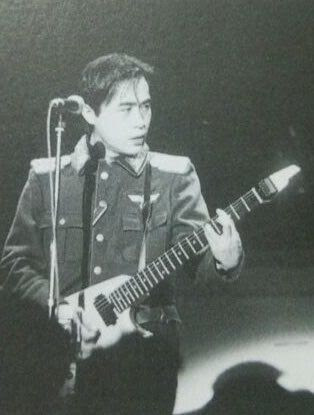
We know Susumu Hirasawa as the magician, blending alien sounds to create brand new worlds inside his works. Throughout his long career, spanning for over 50 years now, he’s released a myriad of iconic albums either solo or with P-Model, worked with Satoshi Kon, and influenced a generation of artists. This series will focus on his career and on how his worldview and sound evolved since his debut in the 70s. We will also attempt to decipher his albums to explore the hidden meanings behind these masterpieces. To do this, we must start at the very beginning, so let’s travel back to the 70s, to the beginnings of Susumu Hirasawa.
Susumu Hirasawa started as the frontman of a prog-rock band called Mandrake. They were active from 1973 up to 1978, with their final live show being played on 1978’s New Year’s Eve. Hirasawa founded the band with Fumiyasu Abe, his high school friend. Abe approached Hirasawa, who hadn’t played in some time and shifted his interest to motocross. Hirasawa didn’t take Abe’s initial proposal, but after a truck completely destroyed Hirasawa’s motorcycle, he decided to join Abe, as he lacked money to fix his bike.
In the band’s early days, Hirasawa worked as a fruit carrier during the morning, rehearsed with Abe during the day, and at night, the duo would work together at a Pepsi warehouse. Hirasawa and Abe experimented with various genres, with Abe taking on the vocalist duties at first. The success wasn’t there however. They searched for people to join the band, but found nobody wanting to pursue a career in heavy rock and blues they played. In 1973 though, they managed to recruit a bassist and drummer; Yasumi Tanaka and Sadatoshi Tainaka.
At first, they played covers of popular Western hard rock bands, like Black Sabbath or Deep Purple. Mandrake’s first concert wasn’t exactly a sold-out classic. They couldn’t finish playing ‘錯乱の扉’, as the drunkards in the audience started throwing trash cans at the band before the intro even ended. Later, Hirasawa called the concert an “unforgettable day of humiliation”. Mandrake shifted away from progressive rock after Abe was unable to keep with the unusual time signatures of the genre after his girlfriend broke up with him. At the time of the switch, Tanaka became the band’s keyboardist, and Hirasawa picked up the vocals with hesitation. The band needed a bassist, so Hiromi Seki was approached by Hirasawa.
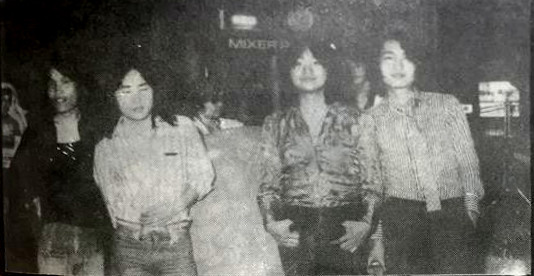
There was a problem however; Seki was an avid fan of rockabilly and Eikichi Yazawa. He was successfully converted to prog after being exposed to Pink Floyd’s Atom Heart Mother. The funny thing about Seki is that he didn’t know how to play any instruments prior to joining. For years until 1977, they played at small venues, and the highlight of that period was during the Tamajigahara Outdoor Festival, which was happening through the pouring rain. After Mandrake entered the stage, the rain suddenly stopped, and a rainbow appeared over the crowd.
Hirasawa wasn’t too fond of the prog scene. This disdain was rooted in class and mindset differences. He quickly became tired of competing with other prog bands, who were influenced by the Western behemoths, played expensive, imported instruments which value reached a million yen (Mandrake’s secondhand gear was valued at around 250 thousand). As Hirasawa stated, prog rock pursued art and beauty, which he found ‘’boring’’. The scene in Japan was exceptionally niche as well, with the best venue for prog, Mirage, setting the attendance record at 30 people, being too small to fit Mandrake’s Mellotron. Prog rock became less and less popular, with jazz fusion becoming the alternative rage.
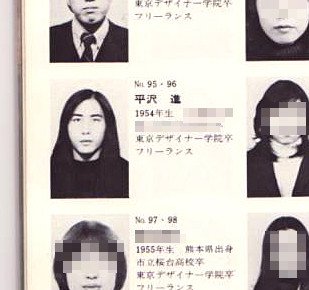
After an exceptionally unfortunate festival, humiliated Hirasawa requested a solo performance at a cafe. Only 3 high school musicians managed to sit all the way through his performance. These people were a band called Abikyōkan, with their leader being Katsuhiko Akiyama, who was recruited by Mandrake as a part of the road crew, and later became a pivotal member of P-Model. The band suffered a blow after Seki returned to his hometown in 1975. He attended the band’s practice via a shinkansen for 2 years, but his parents thought it was all some shady yakuza business, and barred him from doing so.
The bassist to replace Akiyama was Tohru Akutu. His arrival brought interest to the band thanks to his playing proficiency. The band had a chance for their major debut in 1978 after being offered a contract, but the label postponed it. Hirasawa was hired by a synthesizer-focused studio, which was a branch of Yamaha. Mandrake contributed to a manual about playing the CS-10. The tool contained various covers of pop songs, and it remains the only album Mandrake released during their period of activity. Hirasawa stated that he felt like he was selling his soul back then. Later, his superior advised him to enter a Playboy contest, which offered free synthesizers for those who submitted recordings of tracks. Hirasawa’s song was highly praised by Isao Tomita, who stated that calling him an amateur would be a disgrace.
So, the path to genius is rocky. Hirasawa was criticized for his vocals. He didn’t even want to be a vocalist. The band was assaulted by trashcans. No major label contract. Small audience. Bad recording quality. But how did Mandrake sound, exactly?
Mandrake– Unreleased Materials, Vol.1/Vol.2
Recorded: 1973-1978
Genre: progressive rock
Members: Susumu Hirasawa (vocals, guitar), Fumiyasu Abe (vocals, violin), Yasumi Tanaka (keyboard, bass), Sadatoshi Tainaka (drums), Hiromi Seki (bass), Tohru Akutu (bass)
Length: 56:11 (Vol.1) / 40:34 (Vol.2)
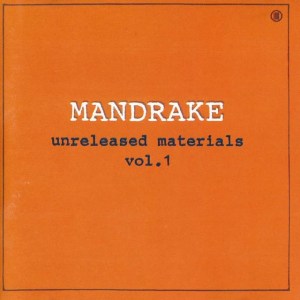
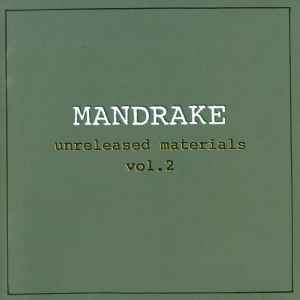
I immediately associated their sound with Les Rallizes Denudes, especially on early tracks like ‘錯乱の扉‘. This aggressive, lo-fi style is very similar to their peers from Kyoto. However, Les Rallizes Denudes reveled in wild experimentation, and Mandrake, while still experimental, was more tamed than other Japanese progressive rock bands of the time. Some sections of the albums feel like rehearsal tapes. The sound quality is not perfect (and that would be a nice way of saying it), but, in my humble opinion, it is a part of its charm. Later Hirasawa is polished and clean, especially during the heavily electronic P-Model era, where some songs make you feel like you’re entering the circuits of a futuristic supercomputer. Mandrake is raw. The quality is often criticized, and I say, why? Sure, it doesn’t sound really good but that’s just how recordings of underground bands from the 70s are. Les Rallizes Denudes are praised for the very same awful recording quality. On these early Mandrake tapes, you can make out Hirasawa’s blooming genius, still unearthed.
‘飾り窓の出来事‘ (Happening By The Windowsill) opens the first tape. In my opinion, it is Hirasawa’s first masterpiece. The dramatic intro opens the song in a grandeur fashion, making way for Hirasawa’s haunting vocals during deconstructed verses, backed by organs and a thick bassline. It’s a cult classic of early Japanese rock, and a track that every Hirasawa fan should hear, no matter if you’re a hardcore fan or only know his work for the Berserk adaptation. It’s incredible that they were just an amateur band at the time, juggling part time jobs and buying second hand equipment just to make ends meet. ‘終末の果実‘ (The End Times Fruit) is slower and more numb. The apocalyptic themes of the song foreshadow Hirasawa’s later lyrical interests of cultural decay and entropy. ‘犯された宮殿’ (Violated Palace) is more aggressive. It has a present leitmotif. Volume 1 ends with ‘錯乱の扉’ (Door of Confusion)- the track that got the band a trashcan applause from drunkards. This one was recorded in 1972, and remains the earliest known Hirasawa track. Listeners often cite it as Mandrake’s darkest piece. Overall, Volume 1 foreshadows Hirasawa’s later sonic grandeur and theatrics. It is the less experimental volume of the two, the one where songwriting with a clear structure shines the brighter.
Volume 2 is similar to the first one, but less straightforward. The brooding atmosphere remained, apparent on the opening ‘Mandragora‘, a title track for the band. The organs are still there, Hirasawa’s vocal performance sounds like he’s a lead actor in an Elizabethan drama, all the good stuff. ‘Tales from Pornographic Ocean‘ is divided in two parts: the first one fast and noisy, the other just as noisy but slower, reminiscent of King Crimson. The fuzzy guitar intermingles with violin, synths, and some spectacular drums. Masters at work. ‘流れの果てに‘ (At the End of the Flow) starts with a short drone accompanied by a marching drums, with a somber guitar joining in shortly after. This song encompasses what Mandrake stood for instrumentally: darkness, heaviness, drama. The guitars especially sound a bit like they belong on a Black Sabbath album. The song stops after 4 minutes, and returns with a noisy, windy arrangement of guitars. In the middle, there is a calm break that evolves into yet another heavy performance. ‘いりよう蜂の誘惑’ (Temptation From Necessity Bees), a purely electronic and short track that closes the record with some sinister drones and sharp synths. This track signifies the early shift and transition that would accompany P-Model’s later birth.
Mandrake’s last show featured a skit which starred Yūichi and Akiyama as mad scientists, a treadmill and a glowing multicolored fetus. This song brought me such imagery without even knowing this fact. All in all, Mandrake, despite sounding so radically different from Hirasawa’s later escapades, has so many components that were prominent in all of his future albums, and its overall sound is, undoubtedly, Hirasawa.
Mandrake began to lose its steam gradually, and they started to shift towards new wave—” a genre with meaning” according to Hirasawa. By September, Mandrake grew tired of prog rock, thinking that it lost its alternative appeal. The proof of the band’s disdain was instantly apparent, as the three members have cut their waist-length hair. The music industry also played a hand in this, as the contract never came and they pushed Mandrake to create jingles, while throwing money at more commercial artists.
Hirasawa’s dislike towards the major labels stayed consistent decades after the fiasco, apparent on ‘Logic Airforce’ from 1999’s P-Model or Die. The song has a music video where the band members are airplanes and fucking bomb the Nippon Columbia headquarters. Amazing. Mandrake came to an end on New Year’s Eve 1978, with Hirasawa admitting that commercialism has defeated alchemy. The three hour long show contained a two and half hour set of purely prog songs, followed by a theatrical skit symbolizing the transition, and closing with a half hour long set of new wave songs.
On New Year’s Day 1979, in the Hirasawa family home in Kameari, P-Model was born.
Unreleased Materials Vol.1 / Vol.2
★★★✬
Must-listens:
‘飾り窓の出来事‘ (Happening by the Windowsill)

 JPALT
JPALT 
Leave a comment