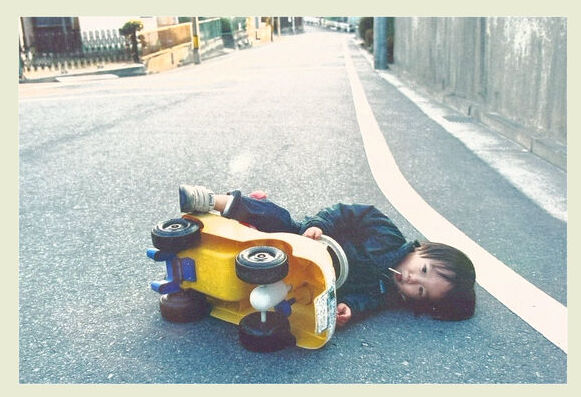
“Measured explosions” is the term best used for Trooper Salute’s debut album: I Had a Friend (Tomodachigaimashita).


Every moment of explosiveness in this album is calculated into a spectacular fireworks show— exciting the senses of the listener on the other side of the river without overwhelming them.
I Had a Friend encompasses the tragic beauty of leaving a party early; well-dressed, lover left behind as an empty sidewalk welcomes you home. While you find yourself gazing at your shoes in shame, the fireworks keep roaring along the echoes of the city. It is this scene straight out of a Hermann Hesse awkward love story that the opening track ‘Doppler’ paints. Though it is a sad prospect, like a Hesse short story, this track carries tinges of maturing and bravery in the face of humiliation. It is this distilled positivity that the album leaves to the listener as a wayward gift to the marching of the snare.
Track two is the kaleidoscopic ‘Zetsuen’. This is a great song for any new parents to introduce their children into the world of j-rock music (or music in general… or the world in general). With the cozy bubbles of vocal chops popping the listener into a wholesome soundscape, this song slowly matures and sonically eases the concept of “complications” to any newcomers. After the vocal Eden fades away, instrumental waves in the style of Toe carry the progression of the song in a bright swoon led by the fluid drums of Kion Umemura until the final, tragic waltz. The finale of this song can best be described by this Pynchon passage: “…and their faces, the dear, comical faces they have put on for this ball, fade, as innocence fades, grimly flirtatious, and striving to be kind…”
‘Tsutsunuke’ recalls all things mellow metropolis, all things Tokyo, New York, and all things cosmopolitan. Transporting the listener onto the Christoph Neimann cover for The New Yorker flying in the clarinet winds of the subway. Hosted with a smooth and subtle guitar solo amping up the intensity of the song, slowly but surely, the song ends by showcasing one of the album’s most prominent components: The snare. It’s quite fitting and becoming for a band called Trooper Salute to include snare patterns like those in military marches. Even though thematically it makes sense to end this song the way it does in preparation for the next track, the switch in pace seems too rushed for a song that advertised a slow tourism week in the big cities.
The chaotic and irresolute ending switches our perspective from the slow tourist to the hurried subway commuter in ‘Yodaka’. Like the running commuter who has no time to appreciate the city around them except for brief seconds after stepping out of the flat, an inconvenient stop, or to catch a breath after arriving, ‘Yodaka ’carries that same amount of substance during its runtime, which is to say: sparse. It sure is a fast-paced track which at one point carries a 70s boogie-woogie keyboard passage, and a key change, but is not a key moment in the album by any means and makes the sacrifice in pace we heard at the end of ‘Tsutsunuke’ feel even less justified.
Like a benevolent deity, ‘Holy Night’ comes as a redemption, another weekend in the city, a second chance at a slow-paced song that gradually caresses chaos. In this case we can say it succeeded. Making Musashi’s voice the catalyst this time, we can hear influences from Asobi Seksu coming from her. The inclusion of the xylophone at the end reassures us what we had been suspecting throughout the whole song but hadn’t put into words until then: that this time around we had fun, and all that is left is a good night of sleep.
‘Rachi’ brings us into regretful memories with clarinets more bittersweet than those in ‘Moonbeam Song’ by Harry Nilsson. Memories of a Boyhood Day (少年の日の思い出) is a short story by Hermann Hesse about a boy who collects insects. One day, after stealing and damaging a very rare moth from a neighbor his age, he confesses his wrongdoing expecting to be shown a path to redemption, but is simply disregarded by the victim as a lower person for his transgression. In a fit of guilt he destroys his entire collection. It is this first encounter with the irreparable that ‘Rachi’ captures like a sweet sting using a swinging momentum found in songs like ‘Dilatant’ by Siraph, ‘Gobyoushi’ by Midori, ‘Grace’ by Jeff Buckley, ‘Many Shades of Black’ by The Raconteurs or ‘Sleeping Ute’ by Grizzly Bear.
‘Throw In’ shows us one of the many strengths of this album: Trooper Salute’s ability to showcase the nuance in happiness and positivity. In many works of great art, happiness is dismissed, portrayed as an end-goal, missed as a gone treasure, or shown as a complete concept. It dares not explore the number of shades or permanence sadness has such as: ‘saude’, ‘ennui’, or melancholy. It is a very impressive feat for a debut album to present happiness as an engine rather than the place the car is heading to, and to do it in a way that is mature enough for us to know that these emotions can co-exist with our daily lives, however hard these may be, and that these are not hermetic emotions produced in a studio only to be enjoyed for the duration of the song. A key change throws us off and lets us know that this band is composed of subtle masters of their craft.
After this, we slow the pace a bit (and only a tiny bit) with ‘Chaban’ and find ourselves again in the streets, on our sad walk back home from the party. The air slapping us relentlessly in the face with those overdriven and reverberated guitars from My Dead Girlfriend, Yuragi and a shoegaze style found in ‘Helicopter’ by Deerhunter filled with pastoral sadness. We don’t even have time to process the cold gust before a sudden urgency of Chon style riffs and a very tight hyper groove swarms in like hornets. Following ‘Chaban’, we slow the pace a bit.
‘Akuchie’ is about the aloofness and lightness of an unexpected friendship. With the casual synths of HARU NEMURI’s ‘Underground’, the childishly unconcerned yet on-point drum machines of ‘Blue Boat’ by SUSU, the most playful depiction of the bass in this album, and a guitar solo out of a song from The Strokes, Metronomy, or Last Dinosaurs. ‘Akuchie’ serves as an ode to those friends who come unexpectedly into our lives and stay for the long ride. Overall not a strong cut, but it fills the airtime nicely. It is certainly a ballad of care-free sentiments.
‘Utopia’ is an outlier sound design-wise with a static nature to it, touching on the early songs that would permeate the air in your grandmother’s house as a child. ‘Stork’ by Ichiko Aoba and ‘Canon’ (‘カノン)’ by Haruka Nakamura and Janis Church are very good companions if you like this kind of sound.
“… If there is any kind of God, it wouldn’t be in any of us—or you or me, but just this little space in between.”
This line from Before Sunrise encapsulates the ethos of the title track and album title: ‘I Had a Friend’ (Tomodachigaimashita). Sonically, this is a message Trooper Salute is more than able at delivering as their band chemistry is solid. Sure, there will be blunders in trying, works like Look Back by Tatsuki Fujimoto and Monster Directed by Hirokazu Kore-eda show us the hardships, the misunderstandings, the lack of contexts and the nasty emotions that can arise from the deceptively simple intention of bonding.
Either way, all of these scars can, with time and care, seem as silly as a child falling sideways in their toy car and hopefully we may laugh at such an image. The slow buildup into something serene is what differentiates this song from the previous “measured explosions” in the album. This track has the same elements as fireworks but now it’s the dialog between the band mates and their instruments that is exposed as the most beautiful sight of the event. The wind that hits us for the last seconds of the song is a petrichor sounding synth that brings the waft of bygone rain. The 8-minute runtime makes itself functional, telling us that true connection takes time and patience.
After having gone ‘round this world full of tempered hope, Trooper Salute closes their debut album with the farewell gift of ‘Narenohate’. With a composition that follows the string arrangements of THE NOVEMBERS, the guitar riffs, piano and inquiring voice of Mexican sweetheart Mon Laferte in ‘Mi Buen Amor (feat. Bunbury)’ or Metronomy’s ‘Trouble’, and North American rock band OK GO’s drum mixing, it is a final reassurance before ending the album and throwing us out into the real world. A reassurance that it is worth it to take out the headphones, to go out of the house, to go out of our way to try and live despite the relentless gusts of wind that may carry us away.
It is during these parts of our lives that our heartbeats must resemble the beat of the bestial drum solo that ensues before the final catharsis of this album. To quote Paul Valery: “The wind is rising! … we must try to live!”

Leave a Reply